The parts of loss draft that don't need a person
Most conversations about loss draft turnaround focus on the servicer's queue. That's fair, since it's where the file sits longest. But it isn't where the time is actually spent.
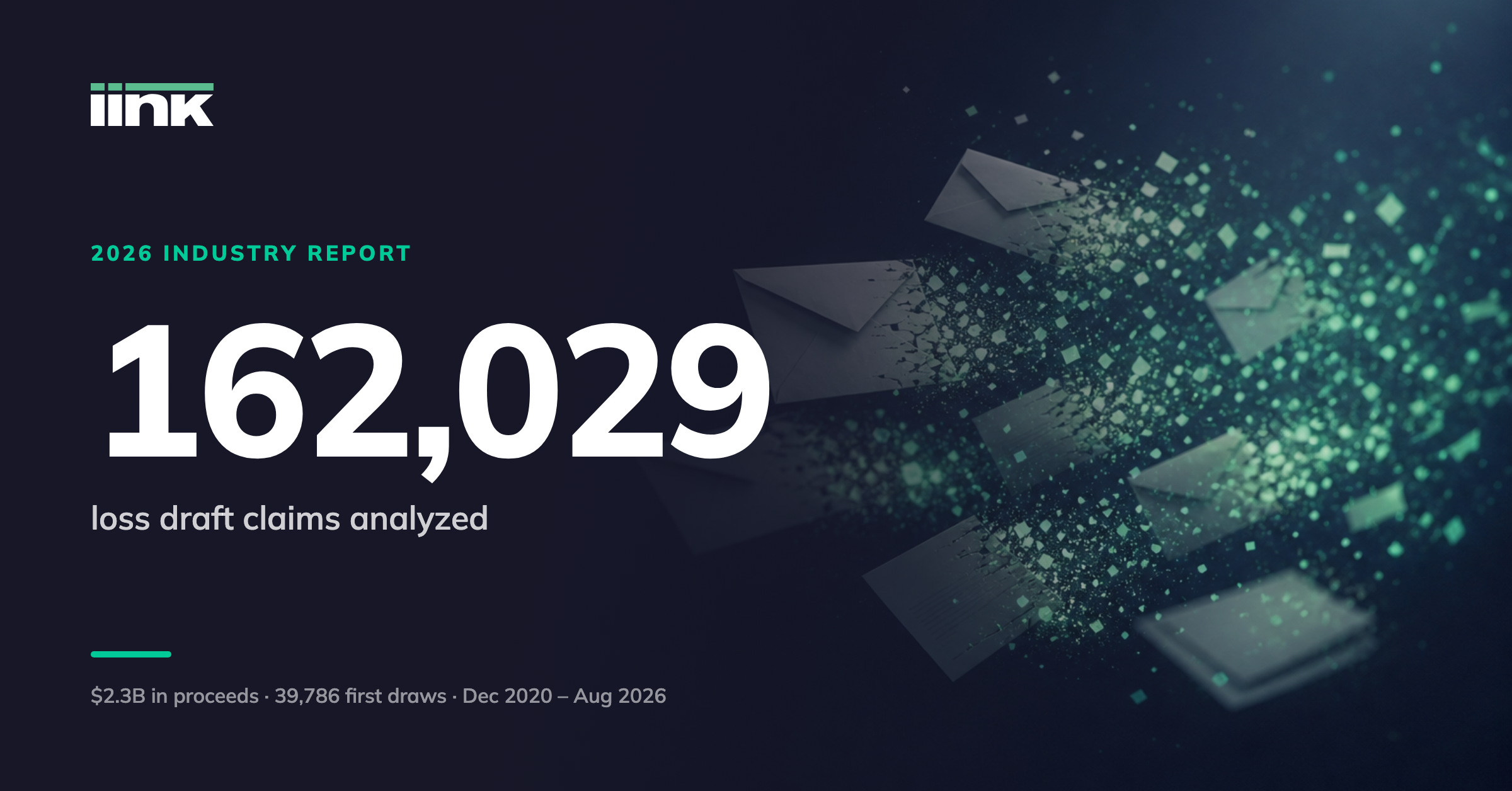
Our 2026 industry report looked at 162,029 deposited claims and $2.3B in proceeds moving across the platform, and the pattern in the turnaround data is consistent: a large share of the cycle isn't review at all. It's transit, signature collection, and rework. A package goes out, comes back incomplete, goes out again. A check waits on a wet signature. Two legs of first-class mail bracket a review that took an afternoon.
Those steps are mechanical. They don't require judgment, and they're the ones that respond to process change rather than headcount.
The non-monitored track is where this shows up first
Claims that don't require a servicer endorsement should be the fast ones. In practice, they carry many of the same handling steps — the same document collection, the same signature, the same physical check moving through the mail.
Strip those out and the timeline compresses immediately. That's the case for electronic endorsement and ACH disbursement on non-monitored claims specifically: there's no review gate to wait on, so removing the paper removes most of the elapsed time.
A conversation worth an hour
Vicki Koglmeier, VP of Claims and Loss Administration at OSC Insurance Services, hosted a session with Tom McGrath of iink covering exactly this ground — effective loss draft servicing, tracking strategy, virtual inspections, and expedited check handling, alongside a walkthrough of digital endorsements and ACH for claim settlement proceeds.
It's a practitioner-level discussion rather than a product pitch, and it's the sort of detail a report doesn't have room for.
The wider picture
If you want the numbers behind this, our 2026 industry report covers what first-draw turnaround looks like across the platform, what a loss draft event costs a servicer per loan against the MBA's servicing benchmark, and where those timelines sit relative to Reg X's error-resolution window.
It's an industry benchmark rather than a scorecard for any individual operation, drawn from a fully anonymized view of the claims moving through the platform since December 2020.
Read The State of the Loss Draft Industry →
Or if you'd rather talk through your own numbers, book 30 minutes with Tom McGrath →