The Complete Guide to Digital Claim Payments
.jpeg)
Every year, millions of homeowners file property insurance claims after storms, fires, and floods. Most expect their insurance company to send a check and close the case. What actually happens is far more complicated: a multi-party payment process involving your insurer, your mortgage company, and sometimes your contractor or public adjuster.
That process still depends heavily on paper checks. Those paper checks are a leading source of delay, confusion, and financial stress during property restoration.
This guide walks you through why property insurance claim payments still rely on paper, what happens at each stage, and how digital methods are replacing outdated workflows. You will learn how to navigate the loss draft process and how iink Payments helps homeowners and public adjusters move from paper to digital.
Key Takeaways: Digital Claim Payments for Property Insurance
- Paper checks remain the default for property insurance claim payments because mortgage company guidelines and Fannie Mae/Freddie Mac requirements mandate multi-party endorsements.
- Loss drafts require your insurer, mortgage company, and all payees to coordinate endorsements before funds are released, often adding weeks to the timeline.
- Digital payment platforms reduce processing time by enabling remote check capture, electronic endorsements, and transfers straight to each payee's bank account.
- iink Payments streamlines the multi-party claim check process by coordinating mortgage company requirements and directly allocating claim proceeds to each stakeholder.
- Homeowners and public adjusters who understand monitored versus non-monitored claims can set realistic expectations and avoid preventable delays.
Why Do Property Insurance Claim Payments Still Use Paper Checks?
The property insurance industry's dependence on paper checks is not a matter of preference. It is a structural consequence of how claim payments are regulated and processed when a mortgage exists on the property.
When your home is damaged and you file a claim, your insurer issues a settlement check. If you have a mortgage, that check is made payable to you and your mortgage company. This happens because the mortgage company has a financial interest in the property and is listed on your homeowners insurance policy as a lienholder.
The guidelines governing how these checks are handled originate from Fannie Mae and Freddie Mac loss draft requirements. These guidelines require mortgage servicers to verify that proceeds are used for repairs before releasing funds. The result is a paper-intensive process designed decades ago.
What Is a Loss Draft?
A loss draft is the insurance claim check issued after your property sustains damage from a covered event. The term refers specifically to the check your insurer sends when a mortgage company is named as a co-payee. All named parties must endorse the check before it can be deposited.
For homeowners without a mortgage, the process is relatively straightforward: the insurer sends a check directly to you. For homeowners with a mortgage, the loss draft process introduces additional steps, additional parties, and additional waiting time.
How the Mortgagee Clause Creates a Multi-Party Payment
Your mortgage agreement requires your lender to be listed on your homeowners insurance policy. When a claim is paid, the insurance company includes the mortgage company as a payee on the settlement check. This is standard across the industry and applies to claims of all sizes.
The mortgage company's role is to ensure that claim proceeds are used to restore the property to its pre-loss condition. In practice, this means the mortgage servicer (or its loss draft department) must endorse the check, and for larger claims, may hold the funds in escrow and release them in stages as repair milestones are completed.
How the Paper Check Process Works Step by Step
Understanding each stage of the paper check process helps explain where delays occur and why digital alternatives are gaining traction. Here is what typically happens after your insurance company approves a property claim.
Step 1: Insurance Company Issues the Claim Check
After your adjuster evaluates the damage and determines a settlement amount, your insurer issues a check. If you have a mortgage, the check is made payable to you, the mortgage company, and in some cases your contractor or public adjuster. This multi-party structure is required by your mortgage agreement and your insurer's guidelines.
Step 2: You Receive and Endorse the Check
You receive the physical check by mail. Before the check can be processed, every named payee must endorse it. For homeowners working with a public adjuster or contractor, this means coordinating schedules and physically meeting to sign the check, or mailing it between parties.
Step 3: The Check Goes to the Mortgage Company
Once all non-mortgage payees have endorsed the check, it must be sent to the mortgage company's loss draft department. The mortgage servicer reviews the claim documentation, verifies endorsements, and determines whether to release the funds immediately or hold them in escrow.
For non-monitored claims (typically under $40,000, though thresholds vary by servicer), the mortgage company endorses and returns the check without holding funds in escrow, and turnaround depends on the servicer's review queue. For monitored claims (typically larger amounts), the funds are deposited into an escrow account, and releases are tied to verified repair progress.
Step 4: Escrow Holds and Staged Releases
On monitored claims, mortgage companies typically release claim proceeds in installments. A common pattern is one-third upfront, one-third at 50% repair completion, and the final third after a completion inspection. Each release requires documentation, contractor invoices, and sometimes a physical property inspection.
This staged release structure means homeowners and contractors may wait weeks or months between payments, even after the insurer has already approved the full settlement amount.
Step 5: Final Disbursement and Check Clearing
After the mortgage company endorses and returns the check (or releases escrow funds), the check must still be deposited at a bank and cleared. Clearing typically takes several business days, and only after clearing are the funds available in the payee's account.
Where Paper Checks Create Delays and Problems
Each handoff in the paper check process introduces a potential delay. These are not hypothetical risks. They are documented friction points that homeowners and restoration professionals encounter on a regular basis.
Mail Delivery and Physical Handling
Paper checks are subject to postal delays, misdelivery, and physical damage. A check lost in transit means a reissuance process that can add one to three weeks. During catastrophic events, when mail infrastructure itself may be compromised, these delays compound.
Coordination Among Multiple Payees
A single claim check may name three or four parties. Coordinating physical endorsements among a homeowner, public adjuster, contractor, and mortgage company requires scheduling, travel, and follow-up. Each additional payee adds time to the process.
Mortgage Company Processing Timelines
Once a check reaches the loss draft department, processing timelines vary by servicer. Some mortgage companies process endorsements within a few business days. Others may take two to four weeks, particularly during high-volume periods following major storms.
Fraud and Security Risks
Paper checks carry inherent fraud risks. Lost, intercepted, or altered checks can be cashed before the intended payee or the issuer detects the problem. According to research from the Association for Financial Professionals (AFP), reports of check fraud have continued to rise, making paper payments a growing liability for all parties involved.
Lack of Visibility and Status Tracking
Once a paper check leaves the insurance company's system, there is no built-in way to track its location or status. Homeowners and their representatives are left calling the mortgage company's loss draft department for updates, often receiving inconsistent information. This lack of transparency creates frustration and erodes trust during an already stressful period.
How Digital Claim Payments Work
Digital claim payment platforms address the structural bottlenecks of the paper check process by replacing physical handling with electronic workflows. Here is how the process changes when you move from paper to digital.
Remote Check Capture
Instead of mailing a physical check or driving it to a bank, you photograph the claim check with your phone or computer and upload it to a digital platform. The image is securely transmitted for processing without the need for in-person handoffs or postal delivery.
iink Payments enables remote check capture directly from a mobile device or desktop. You upload the check image, and iink's processing team handles the next steps, including coordination with the mortgage company.
Electronic Endorsements
Digital endorsement tools allow all named payees to sign the claim check electronically, from any location. This eliminates the need to physically meet, mail the check between parties, or visit a bank for in-person endorsement. Each payee signs electronically through iink's e-sign process.
Mortgage Company Coordination
On claims where a mortgage company is a payee, digital platforms manage the document submission, tracking, and follow-up with the loss draft department. Instead of calling the mortgage company yourself, the platform handles communication and provides real-time status updates.
With iink Payments, dedicated processing professionals manage all documents to and from the mortgage company. You receive real-time updates on where your check stands in the workflow, eliminating the guesswork.
Standard and Instant Transfers
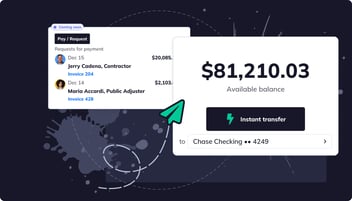
Once the check has cleared and any review is complete, iink directly allocates claim proceeds to each stakeholder, and each stakeholder can send their share to their own bank account. A Standard transfer moves funds by ACH. An Instant transfer moves funds over the RTP network; it carries a fee and is available when the receiving bank accepts instant payments. Either way, there is no final paper check to deposit and wait on.
Monitored vs. Non-Monitored Claims: What Homeowners Need to Know
The mortgage servicer determines whether your claim is monitored or non-monitored based on the claim amount and your loan status. Understanding the difference helps you set realistic expectations for how long the payment process will take.
Non-Monitored Claims
Non-monitored claims are typically below a threshold set by the mortgage servicer, often around $40,000. On a non-monitored claim, the mortgage company endorses and returns the check without holding funds in escrow. The timeline from check upload to funds in your account can be as short as 5 business days when processed through a digital platform.
Monitored Claims
Monitored claims involve higher settlement amounts. The mortgage company holds the funds in escrow and releases them in stages, typically tied to repair milestones verified by property inspections. Each release requires documentation from the contractor, invoices, and sometimes a signed completion affidavit.
The timeline for monitored claims is longer and less predictable, often spanning several months depending on the scope of repairs and the mortgage servicer's review speed. Digital platforms help by tracking each milestone, submitting required documents on your behalf, and providing visibility into where the release stands.
What Public Adjusters Should Know About Digital Claim Payments
Public adjusters manage claim payments on behalf of homeowners, and the loss draft process is a significant operational burden. Coordinating endorsements, chasing checks, and following up with mortgage companies consume hours of staff time on every claim.
Operational Efficiency Gains
Digital payment platforms reduce the administrative overhead associated with claim check processing. Instead of driving to collect signatures or calling the loss draft department for status updates, public adjusters can manage the entire workflow from a single platform.
iink Payments gives public adjusters the ability to upload claim checks, collect electronic endorsements from all parties, and track check status in real time. The platform's processing team handles mortgage company coordination, freeing up your staff to focus on claims advocacy rather than payment administration.
Transparent Disbursement
Once the check has cleared and claim proceeds are ready for release, iink directly allocates claim proceeds to each stakeholder, who can transfer their portion to their verified bank account by Standard transfer (ACH) or by Instant transfer (RTP), which carries a fee. This eliminates the need to write manual checks to property owners or make multiple bank trips. Every transaction is tracked and exportable for your records.
Client Communication and Trust
Property owners often feel anxious about where their money is and when they will receive it. Digital platforms provide stakeholder transparency, giving homeowners real-time visibility into the status of their claim check. This reduces inbound calls to your office and builds trust with your clients.
What Restoration Contractors Should Know About Digital Claim Payments
Restoration contractors are often named on the claim check, but they don't control it. The homeowner receives the check, the mortgage company holds the funds, and the contractor is fronting labor and materials while waiting on both.
Getting Paid When You Don't Hold the Check
A check with your name on it can sit unsigned on a homeowner's counter or get deposited without your endorsement. With iink Payments, the check is uploaded and every named payee signs electronically, so your endorsement is part of the workflow rather than an afterthought.
Staged Releases on Monitored Claims
On larger claims, funds are released in draws tied to inspections and paperwork such as invoices, lien waivers, signed contracts, and completion affidavits. Every missing document can push back the next release. iink's processing team submits documents to the loss draft department and tracks each milestone, so you can see what is holding up the next draw.
Visibility Across Every Job
Loss draft departments often won't share claim status with anyone other than the borrower. Real-time status updates in one place let you schedule crews and order materials around actual release timelines instead of guesses.
Receiving Your Share Directly
Once the check has cleared and any review is complete, iink directly allocates claim proceeds to each stakeholder, and you can transfer your share to your bank account by Standard transfer (ACH) or by Instant transfer (RTP), which carries a fee. There is no waiting on the homeowner to write you a second check.
The Real Cost of Payment Delays for Homeowners
Payment delays are not just an inconvenience. They create tangible financial and personal consequences for homeowners waiting to repair their property.
Delayed Repairs and Secondary Damage
When claim proceeds are held up in the loss draft process, necessary repairs are delayed. A roof that cannot be repaired promptly after storm damage may lead to water intrusion, mold growth, and structural deterioration. What started as a manageable repair can escalate into a significantly larger and more expensive project.
Out-of-Pocket Expenses
Homeowners displaced by property damage often face additional living expenses (covered under the "loss of use" provision of their policy) while waiting for claim funds. Extended payment timelines mean extended stays in temporary housing, extended meal costs, and extended financial uncertainty.
Cash Flow Pressure on Contractors
Restoration professionals rely on timely claim payments to fund labor and materials. When payments are delayed by weeks or months, contractors face cash flow pressure that can jeopardize their business operations.
How Digital Payment Adoption Is Growing in Property Insurance
The shift from paper checks to digital disbursements is accelerating across the property and casualty insurance industry. Several factors are driving this change.
Consumer Expectations Have Changed
Nearly nine in ten Americans now use digital payment methods for everyday transactions, according to a McKinsey analysis of consumer payment trends. Homeowners filing insurance claims increasingly expect the same speed and convenience they experience with other financial transactions.
Catastrophic Events Expose Paper Check Weaknesses
Major storm seasons and wildfire events create surges in claim volume. During these periods, the paper check process breaks down: mail infrastructure is compromised, mortgage company loss draft departments are overwhelmed, and homeowners in crisis wait even longer for funds. Digital payments don't depend on mail delivery or an open bank branch, so they keep moving when a storm disrupts both.
Regulatory and Industry Momentum
Federal payment infrastructure is evolving. The launch of the FedNow instant payment service and the continued expansion of RTP (Real-Time Payments) provide new rails for faster disbursements. Insurance carriers and mortgage servicers are beginning to integrate these capabilities into their workflows, although adoption is still in early stages for claim payments specifically.
How to Navigate the Claim Payment Process More Effectively
Whether you are a homeowner filing your first claim or a public adjuster managing dozens of active claims, these steps can help you reduce delays and maintain visibility throughout the payment process.
Step 1: Understand Your Claim Type
Ask your mortgage servicer whether your claim is monitored or non-monitored. This determines whether funds will be held in escrow or released after endorsement. Knowing this upfront helps you plan your repair timeline and set expectations with your contractor.
Step 2: Document Everything
Keep copies of the original insurance settlement worksheet, the claim check, all endorsement records, contractor estimates, invoices, and any correspondence with the mortgage company. Thorough documentation speeds up each step of the process and protects you if disputes arise.
Step 3: Contact the Loss Draft Department Early
Before sending your check to the mortgage company, call the loss draft department to confirm mailing instructions, required documents, and expected processing times. Ask for a direct contact or reference number you can use for follow-up.
Step 4: Consider a Digital Payment Platform
Platforms like iink Payments handle the heavy lifting of check processing, mortgage company coordination, and fund disbursement. For homeowners, this means less time chasing paperwork and more time focused on restoring your home. For public adjusters, it means reduced overhead and faster payment cycles for your clients.
Step 5: Follow Up Consistently
Whether you are working through a digital platform or managing the process manually, consistent follow-up with the mortgage company's loss draft department is essential. Document every conversation, including the date, the representative's name, and any commitments made about release timelines.
What Replacement Cost Value and Actual Cash Value Mean for Your Payment
Your insurance policy determines how your claim payment is calculated. Two common methods are replacement cost value (RCV) and actual cash value (ACV).
Replacement Cost Value (RCV)
RCV policies pay the cost to replace or repair damaged property with materials of similar kind and quality, at current market prices, without deducting for depreciation. Your initial payment may be based on actual cash value, with the remaining amount (called the "recoverable depreciation") paid after repairs are completed and documented.
Actual Cash Value (ACV)
ACV policies pay the replacement cost minus depreciation. The payout reflects the value of the damaged item at the time of loss, accounting for age and wear. ACV settlements are typically smaller than RCV settlements for the same damage.
Understanding your policy type affects how you budget for repairs and how you interact with your mortgage company's escrow process. If you have an RCV policy, expect the payment to arrive in at least two installments: the initial ACV payment and the depreciation recovery payment after repairs.
In Conclusion: How to Move from Paper Checks to Faster Claim Payments
The property insurance claim payment process is changing. Paper checks, multi-party endorsements, and mortgage company escrow holds have created a system where homeowners and restoration professionals wait weeks or months for funds that have already been approved. That delay has real consequences: stalled repairs, secondary property damage, financial stress, and eroded trust between all parties involved.
Digital payment platforms offer a practical path forward. Remote check capture, electronic endorsements, automated mortgage company coordination, and direct bank transfers reduce the friction at every stage of the process. iink Payments was built specifically to solve this problem, helping property owners, contractors, and public adjusters move claim proceeds faster, with full visibility and a documented record of every step.
If you are navigating a property insurance claim, or managing claims on behalf of property owners, explore how iink Payments can streamline your payment process at iink.com.
FAQs About Digital Property Insurance Claim Payments
What is a loss draft in property insurance?
A loss draft is the insurance claim check issued when a mortgage company is listed as a co-payee on a property damage settlement. The mortgage company must endorse the check before funds are released. iink Payments coordinates this endorsement process digitally, reducing the time required to release proceeds.
Why is my mortgage company on my insurance claim check?
Your mortgage company is listed because it has a financial interest in your property as the lienholder. Fannie Mae and Freddie Mac guidelines require mortgage servicers to verify that claim proceeds are used for property repairs. This protects their investment in the property but adds steps to the payment process.
How long does it take to get claim funds with a mortgage?
Timelines vary based on claim size and mortgage servicer. Non-monitored claims processed digitally through iink Payments can be completed in as few as 5 business days. Monitored claims with escrow holds may take several months, depending on repair progress and the servicer's review schedule.
What is the difference between a monitored and non-monitored claim?
A non-monitored claim is below the mortgage servicer's threshold (often around $40,000) and funds are released after endorsement without escrow. A monitored claim exceeds that threshold, and the servicer holds funds in escrow, releasing them in stages as repairs are inspected and verified.
Can I receive my insurance claim payment digitally?
Yes. Digital payment platforms like iink Payments allow you to upload your claim check remotely, collect electronic endorsements, and send your share of the proceeds to your bank account by Standard transfer (ACH) or Instant transfer (RTP). Funds can be transferred once the check has cleared and any review is complete. Instant transfers carry a fee and are available when your bank accepts instant payments. You avoid bank visits and mailing the check between parties.
How does iink Payments help with insurance claim checks?
iink Payments handles remote check capture, digital endorsements, mortgage company coordination, and direct allocation of claim proceeds to each stakeholder. The platform provides real-time status updates so you know exactly where your claim payment stands. Homeowners avoid the back-and-forth of chasing paper checks and calling mortgage companies for updates.